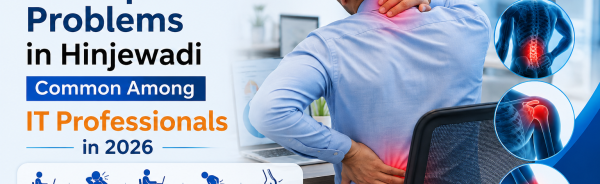

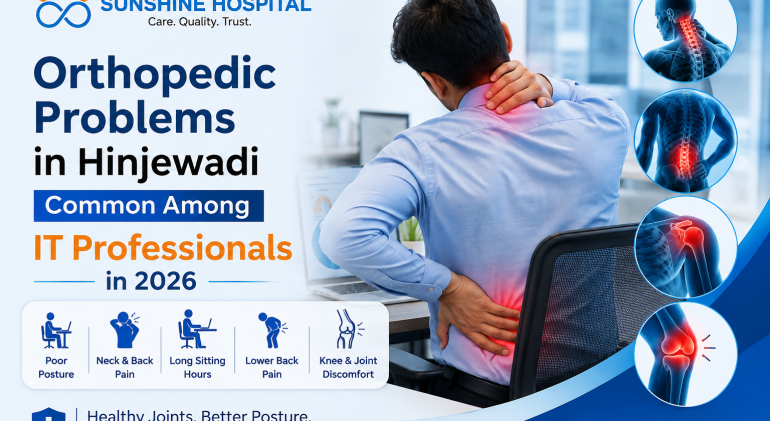
Orthopedic Problems in Hinjewadi Common Among IT Professionals in 2026
Hinjewadi has become the IT hub of Pune, home to thousands of software engineers, developers, and support staff who spend eight to ten hours a day at a desk. Long working hours, tight deadlines, and a heavy reliance on laptops and screens have quietly created a new wave of Orthopedic Problems in Hinjewadi among IT professionals in this belt.
Why IT Professionals in Hinjewadi Face Higher Orthopedic Risk
- Long, uninterrupted sitting stretches during tight project timelines, with little movement through the day.
- Long commutes by bus or car add extra sitting hours on top of an already sedentary workday.
- Poor workstation setup, including chairs without lumbar support and monitors at the wrong height, forces the body into unnatural postures.
- Late-night on-call shifts, back-to-back video calls, and irregular breaks give the body very little chance to reset.
- Work from home has added beds, sofas, and dining chairs as makeshift desks, worsening posture further.
- Doctors now see spine and joint complaints in employees just five to six years into their careers, a trend uncommon a decade ago.
Common Orthopedic Problems Among IT Professionals
1. Neck Pain and Cervical Spondylosis
- Looking down at a laptop screen for hours places extra load on the cervical spine, a problem often called tech neck.
- Repeated strain can lead to cervical spondylosis, where the discs and joints in the neck wear down earlier than expected.
- Symptoms include stiffness, a dull ache spreading to the shoulders, and tingling or numbness in the arms.
- Professionals in their late twenties and early thirties are now showing signs once seen mostly in people above fifty.
2. Lower Back Pain
- Sitting for extended periods puts more pressure on the spinal discs than standing or walking does.
- Poor posture, an unsupportive chair, and weak core muscles put the lower back under constant stress.
- A dull, persistent ache that worsens by the end of the workday is a common complaint.
- Pain radiating down one leg signals possible nerve involvement and needs proper evaluation.
3. Carpal Tunnel Syndrome and Wrist Pain
- Constant typing and mouse use place repetitive stress on the wrists and hands.
- Pressure on the median nerve can cause tingling in the thumb, index, and middle fingers.
- A weak grip and pain travelling up the forearm are common signs.
- Persistent tingling or numbness at night should not be dismissed as ordinary fatigue.
4. Frozen Shoulder
- Poor posture, hunched shoulders, and resting the elbow on the desk for long hours raise the risk.
- Stiffness develops slowly and gradually limits the shoulder’s range of motion.
- Simple tasks like reaching for a shelf or wearing a shirt become difficult over time.
- Diabetes and a sedentary lifestyle, both common among IT employees, are known risk factors.
5. Knee Pain from Prolonged Sitting
- Sitting with knees bent at ninety degrees for long periods reduces blood flow and pressures the kneecap.
- Stiffness, mild swelling, and discomfort often show up when standing after a long meeting or coding session.
- Skipping movement breaks makes this stiffness more likely to turn into ongoing knee pain.
6. Postural Problems and Spinal Misalignment
- Slouched sitting, forward head posture, and rounded shoulders gradually change the natural curve of the spine.
- Tight chest muscles combined with weak upper back muscles create a visible hunched posture over time.
- Correcting this needs a mix of stretching tight muscles and strengthening weak ones.
How These Problems Affect Work and Daily Life
- Constant neck or back discomfort makes it harder to concentrate during coding sessions and client calls.
- Wrist pain slows typing speed and adds pressure during tight sprint deadlines.
- Pain that flares up while lying down disturbs sleep, which in turn slows muscle recovery.
- Daily tasks like lifting a child, carrying grocery bags, or a long flight home can become uncomfortable.
Simple Steps to Prevent Orthopedic Problems in Hinjewadi at Work
- Set up an ergonomic workstation, with the monitor at eye level and the chair supporting the lower back’s natural curve.
- Take movement breaks every thirty to forty minutes to reset blood flow.
- Practice neck and shoulder stretches through the day to release tension before it turns into stiffness.
- Strengthen the core to support the spine and reduce load on the lower back.
- Maintain a healthy body weight, since extra weight adds direct load to the knees and spine.
- Use a footrest or adjustable chair if the desk height cannot be changed.
- Limit late-night screen time, since poor sleep affects muscle recovery.
Frequently Asked Questions
Is neck and back pain from desk work permanent?
- In most cases, no. It responds well to ergonomic correction, stretching, and physiotherapy when addressed early.
Can standing desks fully solve the problem?
- They help by breaking up long sitting stretches, but standing all day brings its own strain on the knees and lower back.
- Alternating between sitting and standing works better than staying in one position too long.
Should IT professionals see a doctor or a physiotherapist first?
- An orthopedic doctor can assess the underlying cause, rule out structural issues, and guide the right course of treatment, which may include physiotherapy.
When to See an Orthopedic Doctor
- Pain that lasts more than two weeks.
- Numbness or tingling that spreads to the arms or legs.
- Swelling around a joint.
- Pain that disrupts sleep or daily activities.
- Consultation usually includes a physical examination and, if needed, imaging tests such as an X-ray or MRI.
- Treatment may involve physiotherapy, posture correction, lifestyle changes, or medication, with surgery considered only when conservative treatment does not help.
Dr. Pravin Deokate is best Orthopedic surgeon in Hinjewadi sees patients for spine, joint, and sports-related orthopedic conditions, including the kind of desk-related neck, back, and joint pain common among IT professionals in Hinjewadi. For appointments and consultations,
visit our profle to Know more about Services and Review
Conclusion
Neck pain, lower back pain, carpal tunnel syndrome, frozen shoulder, and knee stiffness are no longer limited to older adults among Hinjewadi’s IT workforce. Simple ergonomic changes, regular movement, and timely medical advice go a long way in protecting joint and spine health. If you are experiencing ongoing pain or stiffness, book an orthopedic consultation to get an accurate diagnosis and a treatment plan suited to your condition.