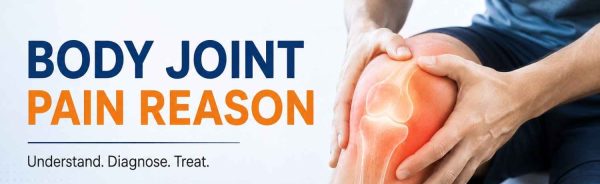


Body Joint Pain Reason: 10 Common Causes You Should Know
Body joint pain reason can range from everyday muscle and joint strain to arthritis, previous injuries, inflammation, or other medical conditions. Joint pain may affect one area, such as the knee or shoulder, or several joints at the same time. Understanding the possible cause is important because the right treatment depends on what is causing the pain.
If joint pain is persistent, worsening, associated with swelling, or affecting your daily activities, an orthopedic evaluation can help identify the underlying problem.
What Is Joint Pain?
Joint pain refers to discomfort, soreness, stiffness, or pain in or around a joint. Joints connect bones and allow the body to move. They are supported by cartilage, ligaments, tendons, muscles, and other soft tissues.
Joint pain can occur in the:
- Knees
- Hips
- Shoulders
- Elbows
- Wrists
- Fingers
- Ankles
- Feet
- Spine
The pain may be mild and temporary or persistent enough to interfere with walking, exercising, working, sleeping, or performing everyday activities.
Body Joint Pain Reason: 10 Common Causes
There are many possible reasons for joint pain. Here are 10 common causes that may explain why your joints are hurting.
1. Osteoarthritis
Osteoarthritis is one of the most common causes of joint pain. It develops when the cartilage that cushions the ends of bones gradually wears down.
It commonly affects the:
- Knees
- Hips
- Hands
- Spine
People with osteoarthritis may experience pain during movement, stiffness after periods of inactivity, tenderness, swelling, and reduced joint flexibility.
The risk can increase with age, previous joint injuries, excess body weight, repetitive stress, and certain genetic factors.
2. Rheumatoid Arthritis
Rheumatoid arthritis is an autoimmune condition that can cause inflammation in multiple joints. Unlike simple wear and tear, the body’s immune system mistakenly attacks tissues around the joints.
Common symptoms include:
- Old age Joint pain
- Swelling
- Tenderness
- Stiffness
- Reduced movement
Pain and stiffness affecting several joints, especially when symptoms persist, should be evaluated by a healthcare professional.
3. Previous Joint Injury
- An old injury can be an important body joint pain reason, even if it happened months or years ago.
- Sports injuries, falls, accidents, ligament injuries, cartilage damage, fractures, and dislocations can affect the structure and function of a joint.
- A previous injury can also increase the risk of developing joint problems later in life.
4. Overuse and Repetitive Stress
Repeating the same movement for long periods can put excessive stress on joints and surrounding tissues.
This may happen in people who:
- Perform physically demanding jobs
- Play certain sports
- Exercise excessively
- Perform repetitive movements
- Spend long periods in particular positions
Overuse can contribute to conditions such as tendinitis and bursitis, which may cause pain around a joint.
5. Gout
- Gout is a form of inflammatory arthritis associated with uric acid crystal buildup in a joint.
- A gout attack can cause sudden and intense pain, swelling, warmth, redness, and tenderness. It commonly affects the big toe but can also affect other joints.
- A suddenly painful, hot, and swollen joint should be medically evaluated because several conditions can produce similar symptoms.
6. Bursitis
Bursae are small fluid-filled sacs that help reduce friction between tissues around joints. When these sacs become inflamed, the condition is called bursitis.
Bursitis can affect areas such as the:
- Shoulder
- Elbow
- Hip
- Knee
Pain may become worse when moving the affected joint or putting pressure on the area.
7. Tendinitis
- Tendons connect muscles to bones. Repetitive activity, overuse, or injury can irritate a tendon and cause tendinitis.
- It can produce pain around a joint, particularly when performing certain movements.
- For example, repetitive shoulder activity may cause pain around the shoulder, while repetitive movements involving the elbow or wrist may cause discomfort in those areas.
8. Muscle Weakness
- Weak muscles surrounding a joint may provide less support during movement. This can place additional stress on the joint and affect movement patterns.
- Strengthening the muscles around affected joints may help improve stability and function in some conditions.
- However, exercises should be appropriate for the individual’s condition. Exercising through significant pain without understanding its cause may sometimes make symptoms worse.
9. Excess Body Weight
- Excess body weight can increase the load placed on weight-bearing joints, especially the knees and hips.
- Over time, increased mechanical stress may contribute to joint problems, including osteoarthritis.
- Maintaining a healthy weight, eating a balanced diet, and staying physically active according to your abilities can support joint health.
10. Joint Infection and Other Medical Conditions
- Although less common, infections can cause significant joint pain. A joint infection may develop with symptoms such as severe pain, swelling, warmth, difficulty moving the joint, and fever.
- Other medical conditions can also cause pain in multiple joints.
- This is why persistent or unexplained joint pain should not always be assumed to be due to ageing or normal physical activity.
Why Do Multiple Joints Hurt at the Same Time?
If pain occurs in several joints simultaneously, there can be different explanations.
Possible causes include:
- Inflammatory arthritis
- Rheumatoid arthritis
- Viral illnesses
- Gout
- Certain autoimmune conditions
- Other systemic health conditions
The pattern of symptoms can provide useful information. Your doctor may want to know which joints are affected, whether both sides of the body are involved, whether there is swelling, and whether stiffness is worse at particular times of the day.
What Symptoms Can Occur With Joint Pain?
Joint pain does not always occur by itself. Depending on the underlying condition, you may also experience:
- Joint stiffness
- Swelling
- Tenderness
- Warmth
- Redness
- Reduced range of motion
- Difficulty walking
- Difficulty climbing stairs
- Pain during exercise
- Difficulty performing daily activities
The combination of symptoms can help an orthopedic doctor determine what further evaluation may be needed.
When Should You See an Orthopedic Doctor?
Occasional mild joint discomfort may improve with rest and appropriate self-care. However, you should consider seeing a doctor when:
- Pain continues for several days or keeps returning
- Symptoms are getting worse
- Joint pain interferes with daily activities
- You have persistent swelling
- You have difficulty moving the joint
- Pain follows an injury
- You have recurring joint stiffness
- You have pain in multiple joints without an obvious reason
Early assessment can help identify the underlying cause and prevent you from relying on pain relief alone without addressing the actual problem.
How Is the Cause of Joint Pain Diagnosed?
Finding the correct body joint pain reason starts with a detailed medical history and physical examination.
An orthopedic doctor may ask about:
- When your pain started
- Which joints are affected
- Whether the pain is constant or intermittent
- Previous injuries
- Your occupation and daily activities
- Exercise or sports activities
- Swelling or stiffness
- Factors that increase or decrease pain
- Previous treatments
Imaging Tests
Depending on your symptoms, your doctor may recommend imaging such as:
- X-ray: Can help identify fractures, changes in joint space, bone abnormalities, and some signs of arthritis.
- MRI: Provides detailed images of soft tissues and may help evaluate cartilage, ligaments, tendons, and other structures.
- Blood Tests: Blood tests may be recommended when an inflammatory, autoimmune, infectious, or metabolic condition is suspected.
- Other Tests: In selected cases, a doctor may recommend additional investigations, such as analysis of fluid from a swollen joint.
Not every person with joint pain requires every test. Investigations should be based on the symptoms and clinical findings.
How Is Body Joint Pain Treated?
Treatment depends on the underlying cause, severity of symptoms, age, activity level, and overall health.
1. Medicines
Depending on the diagnosis, a doctor may recommend appropriate medicines to manage pain or inflammation.
2. Physiotherapy
Physiotherapy can help some patients improve:
- Muscle strength
- Flexibility
- Joint movement
- Balance
- Functional ability
The exercise program should be designed according to the individual’s condition.
3. Lifestyle Changes
For some joint conditions, maintaining a healthy weight, staying appropriately active, and avoiding activities that aggravate symptoms can help manage discomfort.
4. Injections
Certain joint conditions may be treated with injections when clinically appropriate. The type of injection depends on the diagnosis and affected joint.
5. Surgery
Surgery may be considered when there is significant structural damage, a serious injury, or a condition that does not respond adequately to appropriate non-surgical treatment. The surgical approach depends on the specific joint problem.
How Can You Support Better Joint Health?
While not every cause of joint pain can be prevented, several habits can support healthy joints:
- Maintain a healthy body weight
- Stay physically active
- Strengthen muscles gradually
- Warm up before strenuous exercise
- Use proper technique during sports
- Avoid sudden increases in exercise intensity
- Take adequate recovery periods
- Treat injuries appropriately
- Avoid ignoring persistent joint pain
It is also important to choose exercises appropriate for your fitness level and existing joint condition.
Is Body Joint Pain Always a Sign of Arthritis?
No. Arthritis is an important cause of joint pain, but it is not the only one. Injuries, overuse, tendinitis, bursitis, gout, infections, inflammatory conditions, and other medical problems can also cause joint pain. This is why identifying the specific body joint pain reason is more useful than assuming that every joint problem is arthritis.
Frequently Asked Questions
1. What is the most common body joint pain reason?
Arthritis, particularly osteoarthritis, is a common cause of joint pain. However, injuries, overuse, gout, inflammation, and other conditions can also cause joint symptoms.
2. Why do all my joints hurt?
Pain affecting multiple joints can have several possible causes, including inflammatory conditions, infections, arthritis, and other systemic health problems. Persistent or unexplained pain should be evaluated by a doctor.
3. Can joint pain be caused by an old injury?
Yes. Previous injuries involving bones, ligaments, cartilage, or other joint structures can contribute to ongoing or later joint pain.
4. Can lack of exercise cause joint pain?
Long periods of inactivity can contribute to stiffness and reduced mobility. However, persistent joint pain has many possible causes and should not automatically be attributed to lack of exercise.
5. Should I see an orthopedic doctor for joint pain?
If joint pain is persistent, worsening, recurrent, affecting movement, or interfering with everyday activities, an orthopedic evaluation can help identify the underlying cause and appropriate treatment.
Consult an Orthopedic Doctor in Hinjewadi
Persistent joint pain should not be ignored, especially when it starts affecting your movement, work, exercise, or everyday activities. Getting the correct diagnosis is the first step toward choosing appropriate treatment.
If you are looking for an orthopedic doctor in Hinjewadi, you can consult Dr. Pravin Deokate for evaluation of joint pain and other orthopedic concerns. A proper clinical assessment can help determine the likely cause of your symptoms and guide you toward suitable treatment.
Book an Appointment With Dr. Pravin Deokate
If you are experiencing persistent or recurring joint pain, book an appointment with Dr. Pravin Deokate, orthopedic doctor in Hinjewadi, for professional evaluation and personalized treatment guidance.