
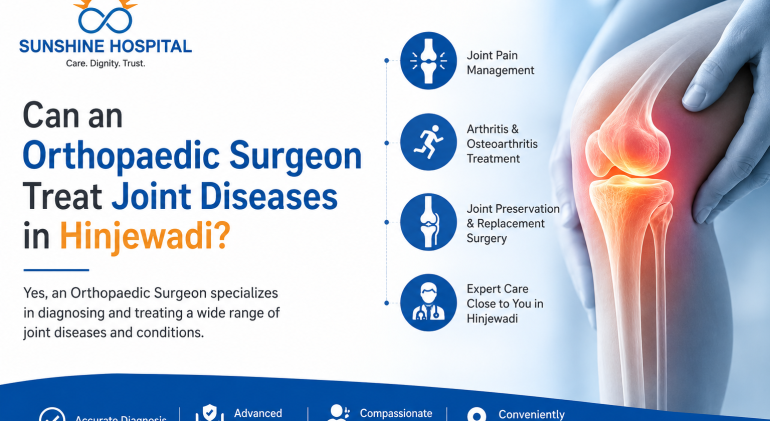
Can an Orthopaedic Surgeon Treat Joint Diseases in Hinjewadi?
Joint pain is one of the most common health complaints people bring up with their doctor, and it affects people of every age group. Whether it is knee pain that makes it hard to climb stairs, shoulder stiffness that limits your daily activities, or hip pain that disrupts your sleep, joint problems can seriously affect your quality of life. If you are searching for reliable joint care in Hinjewadi, one question comes up often: can an orthopaedic surgeon actually treat joint diseases, or is surgery the only option they offer?
The short answer is yes. An orthopaedic surgeon is trained to treat the full range of joint conditions, from the earliest stages managed with medication and physiotherapy, right up to advanced cases that need surgical intervention. This blog explains exactly what an orthopaedic surgeon does, which joint diseases they treat, and how to know when it is time to book a consultation.
Who Is an Orthopaedic Surgeon?
An orthopaedic surgeon is a medical doctor who specialises in the diagnosis, treatment, and prevention of disorders related to bones, joints, muscles, ligaments, and tendons. Their training covers the entire musculoskeletal system, which means they are equipped to handle everything from a sprained ankle to a complex joint replacement.
Many people assume orthopaedic surgeons only perform surgery, but that is a misconception. A large part of an orthopaedic surgeon’s work involves non-surgical treatment. Surgery is usually recommended only when conservative treatments like medication, physiotherapy, and lifestyle changes are not enough to manage the condition.
Common Joint Diseases Treated by Orthopaedic Surgeons
1. Osteoarthritis
Osteoarthritis is one of the most common joint diseases, especially in people above the age of 40. It happens when the cartilage that cushions the joints wears down over time, leading to pain, stiffness, and reduced movement. Knees, hips, and hands are the joints most commonly affected.
An orthopaedic surgeon evaluates the severity of osteoarthritis through physical examination and imaging tests like X-rays or MRI scans. Early-stage osteoarthritis is often managed with weight management, physiotherapy, and medication, while advanced cases may need joint injections or joint replacement surgery.
2. Rheumatoid Arthritis
Rheumatoid arthritis is an autoimmune condition where the body’s immune system attacks the joint lining, causing inflammation, swelling, and pain. While rheumatologists usually lead the medical management of this condition, orthopaedic surgeons play an important role when joint damage becomes severe enough to require surgical correction or joint replacement.
3. Ligament and Tendon Injuries
Sports injuries, accidents, and repetitive strain can damage ligaments and tendons around a joint. Common examples include ACL tears in the knee, rotator cuff injuries in the shoulder, and tennis elbow. Orthopaedic surgeons diagnose these injuries and decide whether they can heal with rest, bracing, and physiotherapy, or whether surgical repair is needed.
4. Frozen Shoulder
Frozen shoulder causes stiffness and pain that gradually limits the shoulder’s range of motion. It often develops slowly and can take months to resolve. Orthopaedic surgeons treat this condition with a combination of physiotherapy, pain management, and in some cases, procedures to loosen the joint capsule.
5. Gout and Joint Inflammation
Gout is caused by a build-up of uric acid crystals in the joints, leading to sudden and severe pain, often in the big toe. While gout is typically managed with medication prescribed by a physician, orthopaedic surgeons get involved when joint damage from repeated gout attacks needs correction.
6. Joint Deformities
Conditions like bow legs, knock knees, and other structural joint deformities, whether present from birth or developed due to injury or disease, fall under the expertise of an orthopaedic surgeon. Correction can range from bracing in children to corrective surgery in adults.
How Orthopaedic Surgeons Diagnose Joint Diseases
Getting an accurate diagnosis is the first step toward effective treatment. Orthopaedic surgeons typically begin with a detailed physical examination, checking for swelling, range of motion, and areas of tenderness. This is usually followed by imaging tests depending on the suspected condition.
X-rays help identify bone and joint alignment issues, while MRI scans give a detailed view of soft tissues like cartilage, ligaments, and tendons. In some cases, blood tests are ordered to rule out autoimmune or inflammatory conditions like rheumatoid arthritis or gout.
Treatment Options Beyond Surgery
A common misconception is that visiting an orthopaedic surgeon automatically means surgery is on the table. In reality, most joint diseases are first managed through conservative treatment.
- Medication: Anti-inflammatory drugs and pain relievers help manage symptoms and reduce inflammation in the joint.
- Physiotherapy: Targeted exercises strengthen the muscles around the joint, improve flexibility, and reduce strain on the affected area.
- Joint Injections: Corticosteroid or lubricating injections can provide relief for conditions like osteoarthritis, delaying or sometimes avoiding the need for surgery.
- Lifestyle Modifications: Weight management, activity changes, and posture correction often play a significant role in reducing joint stress and slowing disease progression.
Surgery is considered only when these approaches fail to provide adequate relief, or when the joint damage is severe enough to significantly affect daily function.
When Is Surgery Recommended?
Dr. Pravin Deokate Orthopaedic surgeons in Hinjewadi recommend surgery based on the severity of the condition, how much it affects daily life, and how well the patient has responded to non-surgical treatment. Common surgical procedures include arthroscopy for minimally invasive joint repair, ligament reconstruction, and joint replacement surgery for severely damaged knee, hip, or shoulder joints.
Advances in surgical techniques mean many procedures today are minimally invasive, leading to shorter recovery times and less post-operative discomfort compared to traditional open surgery.
Why Local Access to Orthopaedic Care Matters
Joint conditions often require ongoing management, including follow-up visits, physiotherapy sessions, and monitoring over time. Having an experienced orthopaedic surgeon available locally in Hinjewadi means patients do not have to travel long distances for consultations, follow-ups, or emergency care after an injury.
Hinjewadi has grown rapidly as a residential and IT hub, and with that growth comes an increase in lifestyle-related joint issues, from prolonged desk work causing posture-related problems to sports and gym-related injuries. Access to a qualified orthopaedic surgeon nearby makes it easier for residents to get timely diagnosis and treatment before conditions worsen.
Post-Treatment Care and Recovery
Recovery from a joint condition, whether treated surgically or non-surgically, depends heavily on how well patients follow their prescribed care plan. Orthopaedic surgeons usually outline a clear recovery roadmap that includes rest periods, physiotherapy schedules, and gradual return to normal activity.
For patients who undergo surgery, structured rehabilitation is critical to restoring strength and range of motion in the joint. Skipping physiotherapy sessions or resuming activity too soon can slow recovery or lead to complications. Regular follow-up visits allow the surgeon to track healing progress and adjust the recovery plan as needed.
Even for non-surgical treatment, consistency matters. Patients who stick to their exercise routines and lifestyle recommendations tend to see faster and more lasting improvement in joint function compared to those who only follow the plan intermittently.
Preventing Joint Problems Before They Start
While not every joint condition can be prevented, certain habits significantly reduce the risk of developing joint problems or slow down existing wear and tear.
- Maintain a healthy body weight: Extra body weight puts additional stress on weight-bearing joints like the knees and hips, accelerating cartilage wear over time.
- Stay active with low-impact exercise: Activities like swimming, cycling, and walking help keep joints mobile and strengthen the surrounding muscles without excessive strain.
- Use correct posture during desk work: With Hinjewadi’s large working population spending long hours at desks, maintaining proper posture and taking regular movement breaks helps prevent strain-related joint and spine issues.
- Warm up before physical activity: Whether it is a gym session or a weekend sport, warming up properly reduces the risk of ligament and tendon injuries.
- Address minor pain early: Ignoring persistent joint pain often allows minor issues to develop into more serious conditions that require more intensive treatment later.
What to Expect During Your First Consultation
Your first visit to an orthopaedic surgeon typically starts with a discussion about your symptoms, how long you have had them, and any activities that make the pain better or worse. The surgeon will conduct a physical examination and may recommend imaging or blood tests based on your symptoms.
Based on the findings, you will receive a clear explanation of your condition along with a treatment plan tailored to your specific case. Most patients start with conservative treatment, and the surgeon will monitor your progress over follow-up visits to decide if further intervention is needed.
Frequently Asked Questions
1. Can an orthopaedic surgeon treat joint diseases without surgery?
Yes. Most joint diseases are first managed with medication, physiotherapy, and lifestyle changes. Surgery is recommended only when these methods do not provide enough relief.
2. When should I see an orthopaedic surgeon for joint pain?
If joint pain lasts more than a few weeks, worsens over time, or affects your daily activities, it is best to consult an orthopaedic surgeon for proper diagnosis.
3. Is joint replacement the only treatment for osteoarthritis?
No. Joint replacement is usually a last resort. Early and moderate osteoarthritis is often managed effectively with medication, injections, and physiotherapy.
4. Do orthopaedic surgeons treat sports injuries?
Yes. Orthopaedic surgeons regularly diagnose and treat ligament tears, tendon injuries, and other sports-related joint problems, using both conservative and surgical methods depending on severity.
Book a Consultation
If joint pain has been affecting your daily life, do not wait for it to get worse. An accurate diagnosis and the right treatment plan at the right time can make a significant difference to your long-term joint health.
Book a consultation with Dr. Pravin Deokate in Hinjewadi today to get a clear diagnosis and a personalised treatment plan for your joint health.
Visit Dr. Pravin Deokate to schedule your appointment.